





CUSCO - INFORMACIÓN GENERAL
Cusco es símbolo del poder humano, es decir, el mundo intermedio entre el cosmos y la Madre Tierra (Pachamama). Sus perfectos muros de piedra y sus misteriosas calles nos recuerdan que se trató de la capital del antiguo Imperio de los Incas bajo construcciones españolas. Una ciudad mágica que despliega cultura, diversos lugares para ver y sentir, monumentos, casonas con patios de historias mil, conventos, museos que guardan arte y riqueza histórica. Hablar de Cusco es también hablar de gastronomía y artesanía. Y es que los cocineros y artesanos han plasmado por generaciones el cuidado de sus costumbres en sus recetas y obras de arte popular.
Desde aquí se puede acceder a las maravillas culturales y naturales de Machu Picchu y el Valle Sagrado. Cusco es para todos los gustos, para la imaginación y convertir su visita en una de las experiencias mas notables, simplemente déjese llevar y Bienvenido ¡!
ATRACTIVOS
Plaza de Armas.
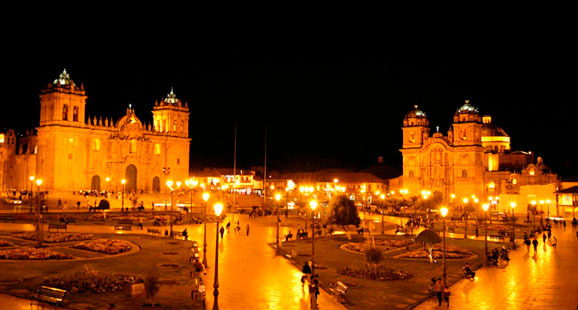
La Plaza de Armas es considerada un lugar histórico por excelencia, recibía el nombre de "Hauqaypata", es decir, "lugar del guerrero". Fue escenario de las fiestas del Inti Raymi, de la ocupación española con el mismísimo Francisco Pizarro, y también de la Independencia. En sus edificios se nota, a simple vista, la superposición de las culturas. Y es que todo ella es una muestra del mestizaje que hubo durante el virreinato como las construcciones coloniales sobre los cimientos de piedra del Palacio del Inca Wiracocha. Hay mucha riqueza de arte colonial por doquier: retablos, esculturas, pinturas, imágenes e innumerables objetos trabajados en plata y pan de oro.
Templo y Barrio de San Blas
A cuatro cuadras de la Plaza de Armas de Cusco, caminando entre baldosas y calles coloridas , su empedrada cuesta y una bella vista es fácil de llegar al famoso barrio de San Blas, muros Inkas a los costados, pequeñas tiendas de diseño de todo y para todos, y los inevitables talleres de los maestros artesanos abiertos para el deleite de quienes desean ver el proceso, la magia de elaboración, desde la cerámica y el labrado de madera a las pinturas con cromática de colores de fantasía en todos los estilos. Un templo antiguo quizás uno de los primeros con un púlpito tallado en una sola pieza de madera que tiene varios metros de alto, trabajado en la época por el maestro Juan Tomas Tuiro Túpac, artista colonial de estirpe quechua. El púlpito, la iglesia y todo el barrio tienen un gran sabor local.
Templo y Convento de Santo Domingo o Korikancha
En quechua significa "recinto de oro" y fue uno de los monumentos arquitectónicos más espléndidos en todo el Incanato. Se encuentra en medio de la ciudad. El Korikancha, de acuerdo con los cronistas, era una de las edificaciones más impactantes del Cusco Inkaico: lucía en su interior paredes enteras recubiertas con láminas de oro, pues era el templo principal del dios Sol. Los españoles edificaron sobre la construcción original, hacia 1,534, la iglesia y el convento dominico, los que se derrumbaron como consecuencia del terremoto de 1,650 y se reconstruyeron alrededor de 1,681. El convento posee una pinacoteca muy valiosa con lienzos de los siglos XVII y XVIII.
Palacio Arzobispal y Piedra de los Doce Ángulos
El edificio es una construcción virreinal levantada sobre las bases del antiguo palacio de Inca Roca. Actualmente es la sede del Museo de Arte Religioso. Los incas pulieron y colocaron las piedras de este palacio con precisión. Basta ver en la calle Hatunrumiyoc el ensamblaje y las esquinas de la Piedra de los Doce Ángulos para percatarse de ello.
Catedral e Iglesias
La Catedral impone su belleza en plena Plaza de Armas, monumento histórico de belleza importante y hoy convertida en museo similar al Louvre, por la cantidad de obras de arte provenientes en su mayoría de la famosa escuela cusqueña (mas de 300 pinturas) trabajos de artesanos expertos muchos de ellos autodidactas realizaron obras magnificas en tallado de madera, láminas de plata pura, pan de oro que adornan los marcos de los cuadros monumentales, el arte en toda su dimensión en los atrios, capillas, el campanario, la gran bóveda.
ARQUEOLOGIA
Complejo Arqueológico de Qenqo
Significa laberinto, un lugar místico ceremonial de connotación muy especial. En la cosmovisión andina, esta huaca fue construida para evocar a Kaypacha, la antigua serpiente u origen de la vida. Los Inkas usaron este sitio para comunicarse con otras deidades como el sol, la montaña, la luna, la tierra y las estrellas. Todo está dispuesto de manera secreta y mágica: los canales, los laberintos, el anfiteatro y la sala de sacrificios. Sin duda un lugar de intensa energía. Desde aquí es fácil apreciar la belleza del paisaje y el panorama de la ciudad desde arriba.
Conjunto Arqueológico de Sacsayhuaman
Fue el complejo ceremonial y religioso más importante del Valle del Cusco, lugar donde convergen los trabajos de ingeniería hidráulica y arquitectónicos más relevantes del imperio. Pasadizos, laberintos, torreones, fuentes, toboganes o rodaderos y explanadas, entre piedras gigantescas expresan el poder de sus constructores y su misterio, ya que aún no se sabe cómo lograron ensamblarlas de manera perfecta. En la actualidad, cada 24 de junio, se lleva a cabo la evocación del año nuevo agrícola (solsticio de Invierno) o Inti Raymi, de reconocimiento mundial.
Complejo Arqueológico de Puca Pucara y Tambomachay
Pukapukara era un recinto militar construido sobre la base de altos muros de piedra roja (diorita roja) labrados de forma similar a los de Sacsaywaman. Cumplió una función de punto de control entre el Valle de Cusco y el del Valle Sagrado (Pisac).
A unos metros cerca se encuentra Tambomachay, uno de los templos más importantes de culto al agua y a la regeneración de la tierra. Aún hoy se puede ver los canales que acarrean las transparentes aguas de manantiales traídos desde lugares recónditos, las pozas labradas en piedra fina que cumplieron un fin ceremonial. Este es un buen lugar para admirar el paisaje impresionante del valle, para reconocer la habilidad de los constructores antiguos que lograban hacer edificios plenamente integrados al paisaje y también para sentir la devoción que los Inkas podían ponerle a cada elemento de la naturaleza.
MACHU PICCHU
Considerado como la creación urbana más asombrosa del Imperio de los Inkas y uno de los sitios patrimoniales más importantes del mundo. Enclavado en la cima de una montaña entre vegetación sub tropical y las nubes que acarician el cielo de los andes. Un lugar enigmático, único en el universo andino y la cultura Inka que guardo durante siglos secretos inexpugnables que hasta hoy siguen siendo un misterio.
La ciudadela guarda importantes vestigios que se traducen en recintos fastuosos, plazas, templos, mausoleos, cuartos para almacenar alimentos, canales de piedra, fuentes, escalinatas y andenes, que se distribuyen sobre la topografía de la montaña trabajada de un modo inigualablemente en su diseño urbano. Construido en el siglo XV (1438-1493), fue el gran centro religioso de culto y de observación astronómica, y como lugar de descanso de la familia real del Inca Pachacutec.
Esta rodeado de montañas , valles, cadena de nevados y complementa su entorno la presencia del Huaynapicchu (montaña joven) desde cuya cumbre se aprecia uno de los panoramas más espectaculares del valle.
Circuito Turístico de Salineras-Maras-Moray
Maras es un pueblo con rasgos coloniales muy importantes que se caracteriza por las portadas con escudos heráldicos en las casonas antiguas y muy cerca de este, en la profundidad de un valle casi oculto se encuentra las minas de Sal (salineras de MARAS) explotada desde la época de los Inkas, cuya tecnología aún se mantiene y es utilizada por los actuales campesinos de la zona. Son más de tres mil pozas que resplandecen por su impresionante blancura y contrastan con el paisaje del entorno. Es una autentica muestra de la tecnología de los antepasados para extraer la sal.
Muy cerca a través de un camino sinuoso rodeado de grandes campos de cultivo se llega a uno de los complejos mas espectaculares del Valle Sagrado, MORAY, una galería de andenes circulares, con diferentes niveles trabajados en la profundidad de un valle. Cada círculo comprende una terraza que se superpone a otra, formando círculos que van ampliándose. Se puede acceder de uno a otro escalando piedras salientes (sarunas), enclavadas en la pared. Fue posiblemente un centro de investigación agrícola donde se llevaron a cabo experimentos de cultivos a diferentes alturas, La disposición de sus andenes produce un gradiente de microclimas teniendo el centro de los andenes circulares concéntricos una temperatura más alta y reduciéndose gradualmente hacia el exterior a temperaturas más bajas, pudiendo de esta forma simular hasta 20 diferentes tipos de microclimas. Se cree que Moray pudo haber servido como modelo para el cálculo de la producción agrícola no solo del Valle del Urubamba sino también de diferentes partes del Tahuantinsuyo.
NATURALEZA
Valle Sagrado
Urubamba es uno de los puntos principales para iniciar un recorrido lleno de magia, naturaleza e historia que dejan sin aliento a cualquier viajero. Todo el valle de Urubamba, conocido también como el Valle Sagrado de los Incas, tiene paisajes sorprendentes. En la época prehispánica fue un centro agrícola muy importante. Desde ahí se puede conocer cada uno de los pueblos de la zona: Ollantaytambo, Pisac, Chinchero y como si fuera poco, sobre la ruta, se puede tomar el tren a Machu Picchu desde Ollantaytambo.
GASTRONOMIA.
Los lugares tradicionales para probar la comida cusqueña son las chicherías y picanterías. Allí se pueden disfrutar platos típicos entre los que destacan el kapchi (guiso o sopa de habas), el chicharrón con mote (carne de cerdo cocinada en su propia grasa), humitas (se hace con masa de maíz fresco dulce o salado), tamal (se hace con masa maiz seco dulce o salado), adobo (carne de cerdo adobada con chicha y especias cocida a la olla) y olluco con carne (guiso de ollucos y cecina o carne de llama.
 +5184 223865
  24Hrs: 958-076720 / 984-118056
 117*469
 reservas@inkaways.pe
 titosouthamericanjourneys