





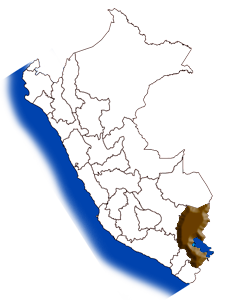
PUNO - INFORMACIÓN GENERAL
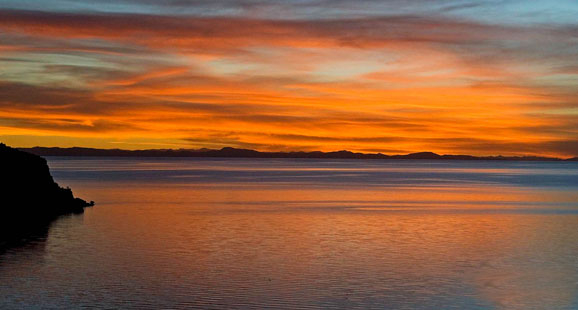
Ciudad emblemática de Peru, lugar donde se ubica el impresionante Lago Titicaca, el lago navegable más alto del mundo. Recorrer este espacio del altiplano andino muestra contrastes de paisajes impresionantes, los pueblitos en la ruta tienen características peculiares, con personalidad propia y de gente amable. Puno es considerada como la capital del Folklore nacional por la cantidad de danzas y música que son muy ricas en su expresión y colorido. Se caracteriza por la belleza y calidad de sus artesanías y textiles elaborados con lana de alpaca, llama y oveja, todos de excelente calidad.
ATRACTIVOS
La ciudad tiene la gracia y características singulares por la cantidad de lugares para recorrer, el Malecón que rodea el lago frente a la ciudad, un lugar apacible para caminar y recrear la vista, la Plaza de Armas, la Catedral, el Balcón del Conde de Lemos, la Casa del Corregidor, el Museo Barco Yavarí y el Museo Municipal Carlos Dreyer que además de las piezas de distintos períodos pre Inkas e inkas tiene la exposición del tesoro Sillustani. Y, por supuesto, no puedes dejar de visitar el Complejo Arqueológico Sillustani, famoso por sus chullpas de hasta 12 metros.
Catedral de la Ciudad de Puno
Fue construida en el siglo XVII y su frontis fue esculpido por el alarife peruano Simón de Asto. Esta iglesia es una muestra del barroco español e incluye elementos andinos que confieren al monumento su carácter mestizo.
Balcón del Conde de Lemos
Construida alrededor de 1668, se cuenta que en esta casa se alojó el virrey Conde de Lemos cuando llegó a la zona para sofocar una rebelión. Actualmente funciona en el lugar el complejo cultural de la Dirección Regional de Cultural de Puno y cuenta con la Galería de Arte "Francisco Montoya Riquelme".
Museo Carlos Dreyer
Se exhiben piezas de cerámica, de plata, de oro, textiles, esculturas líticas pre incas e incas, piezas de la época colonial y la época republicana. Asimismo, aún se conserva una colección numismática y documentos que datan de la fundación española de la ciudad de Puno. Cuenta con 8 salones: Salón Inca, Galería Lítica, Salón Arqueológico Regional, Salón Sillustani (donde se exhiben piezas de oro del tesoro de Sillustani), Pinacoteca, Salón Colonial, Salón de Arte Religioso y el Salón Dreyer inca.
Buque Museo Yavari
Fue construido en Gran Bretaña en la década de 1860 y fue trasladado desde las costas del Pacífico hasta el altiplano en un total de 2766 piezas. En su interior se exhiben accesorios de los diferentes compartimientos del buque, así como documentos, archivos, mapas históricos y maquetas de la época.
Museo Naval
En esta exposición se encuentra todo el relato de documentos de la historia marítima, como la historia del origen del Lago Titicaca desde las épocas incaicas, colonial, independencia, contemporánea, hasta nuestros días. También en el interior del museo se puede observar las unidades de embarcaciones como Vapor Yavarí 1862, Huáscar 1864, B.A.P Puno, espada honorífica del Almirante Miguel Grau, entre otras piezas históricas.
Chucuito
Conocida también como la Ciudad de las Cajas Reales porque fue el centro de recolección de impuestos durante la colonia, destacan allí la plaza principal y las iglesias renacentistas de Santo Domingo (siglo XVI) y La Asunción (siglo XVII); así como el Complejo Arqueológico de Inka Uyo y la Piscicultura de Truchas.
NATURALEZA
Reserva Nacional del Titicaca
La Reserva posee una belleza muy particular, conformada por espejos de agua y extensos totorales. Protege a 87 variedades de aves, 26 especies de peces y 18 de anfibios.
Islas Flotantes de los Uros
Tiene un clima frío-seco. Las islas flotantes están conformadas por una densa vegetación de totora. En esta zona existen más de 60 islas flotantes, donde habitan de 3 a 10 familias en cada una. Las islas más visitadas son Isla Uros, Q´hantati, Q´hanan Pacha y Kamisaraqui.
Islas Flotantes de los Uros
Están conformadas por una densa vegetación de totora. En esta zona existen más de 60 islas flotantes, donde habitan de 3 a 10 familias en cada una. Las islas más visitadas son Islas Uros Q´hantati, Q´hanan Pacha y Kamisaraqui
ARQUEOLOGIA
Complejo Arqueológico de Sillustani
Está a orillas de la laguna Umayo. Es famoso por sus chullpas, que son torreones circulares de piedra levantados para albergar los restos funerarios de las principales autoridades de los antiguos pobladores del Collao. Algunos alcanzan hasta 12 metros de alto y se caracterizan porque su base es menor a la parte superior.
A poca distancia del complejo arqueológico se encuentra el Museo de Sitio, donde se conservan diversas piezas de las culturas Colla, Tiahuanaco e Inca.
Isla Amantaní
Esta isla de 9 km2 de extensión se levanta frente a la península de Capachica. Existen templos ceremoniales pre incas como el Pachatata que está ubicado al norte de la isla, en la cima del cerro Coanos. Este recinto con galerías de piedra es un lugar sagrado en el cual se depositan ofrendas rituales una vez al año. Destacan el Centro Ceremonial de Pachamama, ubicado en la cima del cerro Llacastiti y el Inca Tiana (Asiento del Inca).
Isla Taquile
El acceso a la isla es posible por tres embarcaderos. Chilcano es el principal, al oeste, y mediante el cual se debe ascender 570 escalones para llegar al arco de ingreso y descender hacia la plaza principal. El muelle de Tialamari, cerca a la playa de Kollata Pampa, está al sur de la isla, desde donde se puede iniciar un recorrido de 3 km. por el centro ceremonial de Koanipata y llegar a la plaza principal de la isla. El tercer embarcadero se halla al este de Taquile, siendo el más cercano a la plaza, en el sector Estancia.
GASTRONOMIA
Destacan como platos típicos de la región el cancacho (lechón o cordero al horno macerado en ají y aceite), el pesque de quinua (puré de quinua sazonado con leche y queso), y el chairo (sopa de carne de res y cordero, papas, habas, zapallo, col, chuño, trigo, y chalona o carne seca).
 +5184 223865
  24Hrs: 958-076720 / 984-118056
 117*469
 reservas@inkaways.pe
 titosouthamericanjourneys